Why You Crave a Drink at the Exact Same Time Every Day
Quick Answer: A consistent daily craving time is almost always a learned association — your brain has linked a specific cue (end of workday, a certain room, a feeling of tiredness) to drinking through repetition, not a physical need for alcohol at that hour. Recognizing and interrupting the specific cue is more effective than willpower alone.
It’s not that you’re weak-willed at 5:30pm specifically — your brain built a genuine automatic association through repetition, the same way any habit forms. That’s actually useful information, because learned associations can be identified and interrupted.
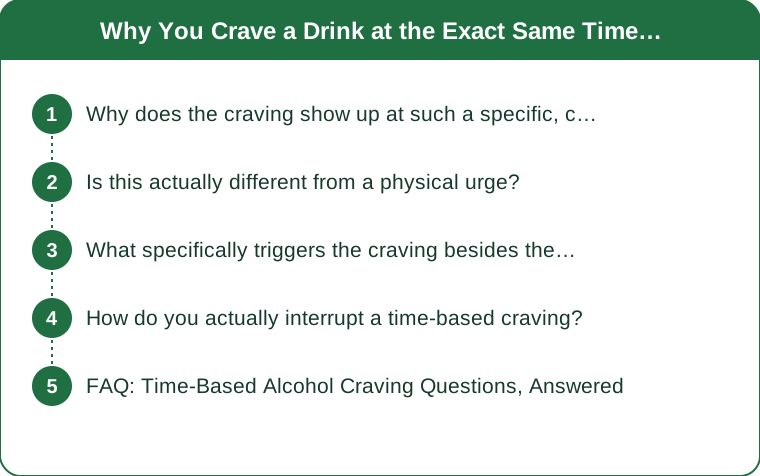
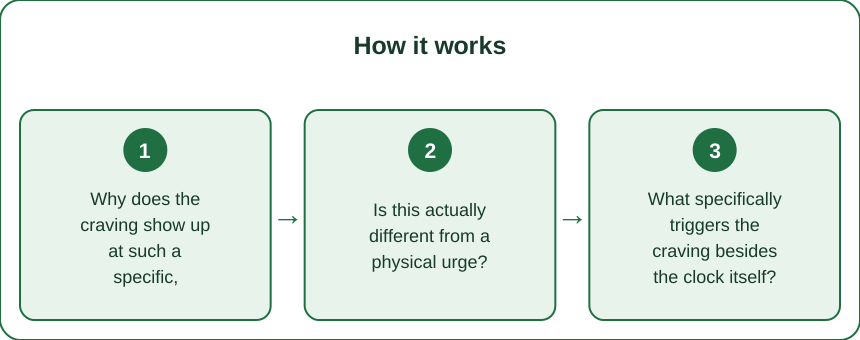
Why does the craving show up at such a specific, consistent time?
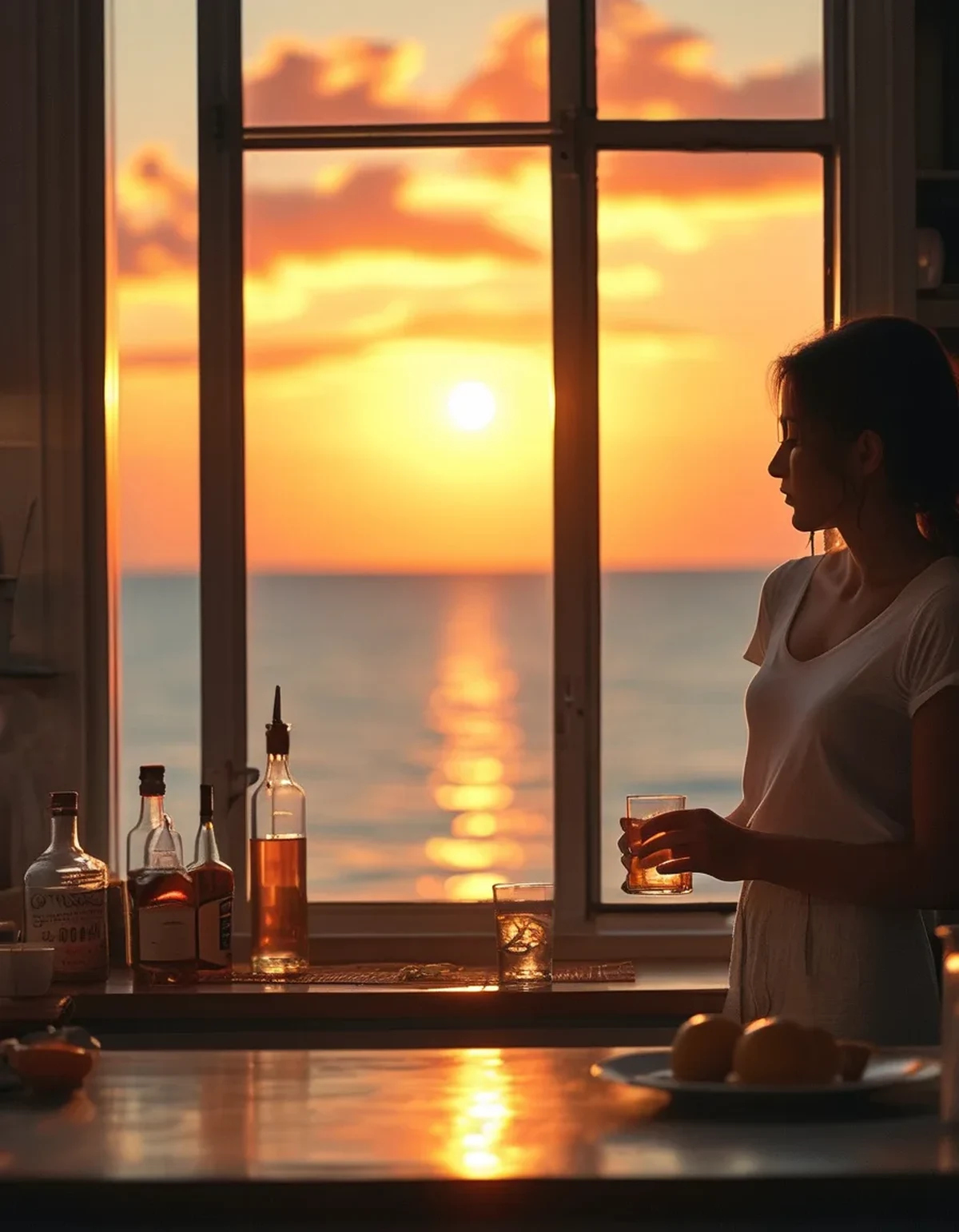
Habits form through repeated pairing of a cue and a reward, and time of day is one of the strongest, most consistent cues there is. If you’ve had a drink around 5:30-6pm regularly for months or years, your brain has built a strong association between that time (or the cues around it — end of work, kids’ bedtime, dinner prep) and the reward of alcohol.
This is the same mechanism behind craving coffee right when you wake up — it’s not about the clock itself, it’s about everything that consistently happens around that clock time.
Is this actually different from a physical urge?
Largely, yes, for habitual (non-dependent) drinking. A learned craving is triggered by cue-recognition — your brain predicting a reward is coming — rather than a physical need for the substance itself. This is why the craving often fades within 10-20 minutes if you don’t act on it; a true physical need wouldn’t fade that fast.
If cravings feel severe, involve physical symptoms (shakiness, sweating, anxiety), or happen outside your usual pattern, that’s different and worth discussing with a doctor — this article addresses habitual, learned cravings, not dependence. This is general information, not medical advice.
What specifically triggers the craving besides the clock itself?
Usually a cluster of cues arriving together: the transition from work to home, a specific room (kitchen, particular chair), a feeling (decompression, tiredness), or even a specific glass or ritual. Identifying your actual cue cluster — not just “5:30pm” — makes it much easier to interrupt, since you can address the real trigger instead of just white-knuckling through a time on the clock.
How do you actually interrupt a time-based craving?
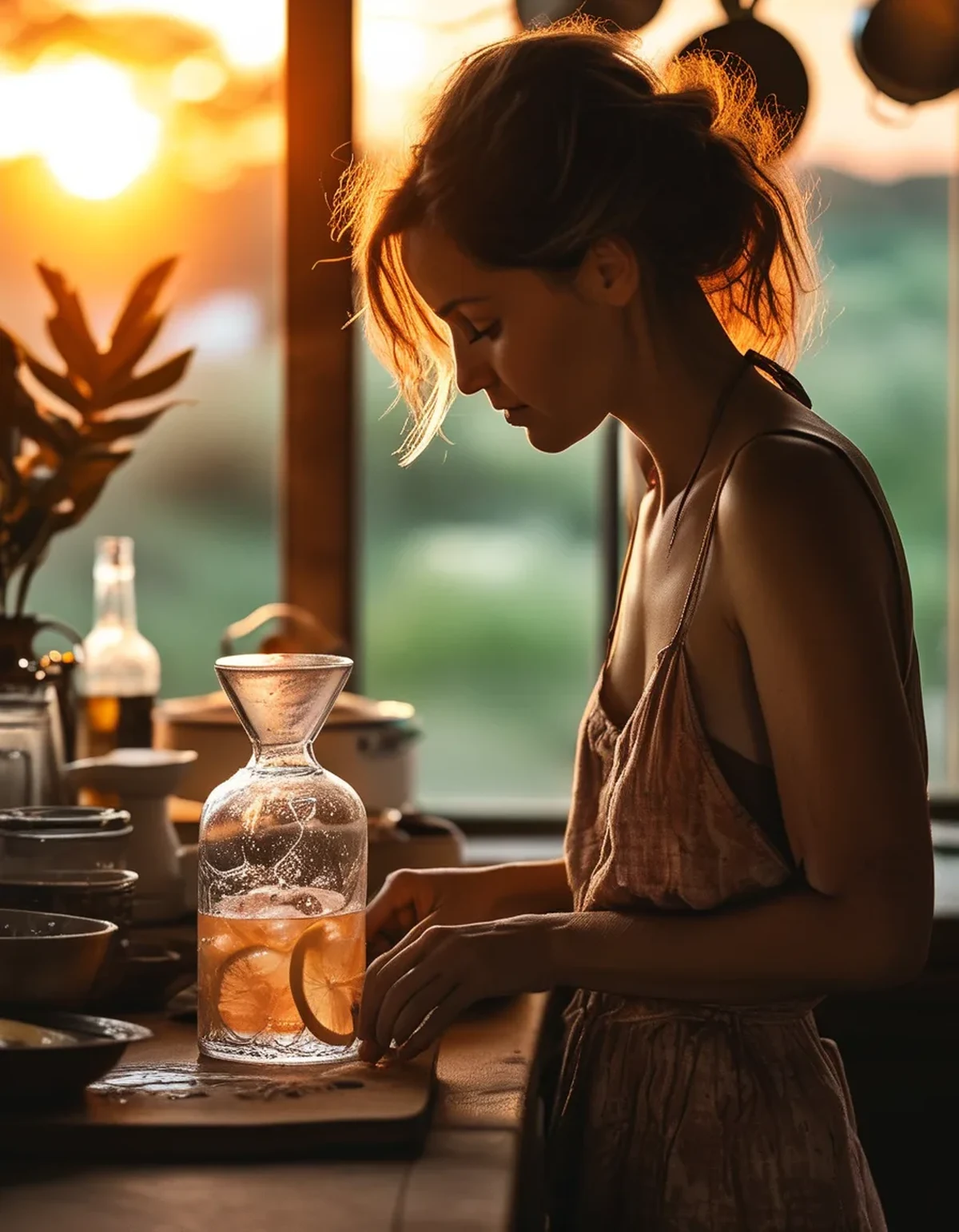
Change one element of the cue cluster deliberately. If it’s tied to a specific chair or room, sit somewhere different for those first 15 minutes. If it’s tied to a ritual (pouring into a specific glass), replace the ritual with a non-alcoholic version in the same glass — the ritual itself carries a lot of the craving’s power, separate from the alcohol.
The first 10-20 minutes are the hardest — cravings that aren’t acted on typically peak and fade within that window. Having a specific plan for exactly that window (a short walk, a phone call, a non-alcoholic drink ready to go) matters more than general willpower.
FAQ: Time-Based Alcohol Craving Questions, Answered
Does the craving ever fully go away?
For most people practicing consistent alternative responses, it fades significantly over 4-8 weeks as the old association weakens — it doesn’t require the craving to never occur, just to stop being automatic.
Do non-alcoholic alternatives actually help, or are they just a substitute habit?
They help specifically because they preserve the ritual cue while removing the substance — for habit-based cravings, the ritual matters more than most people expect.
When should this be a conversation with a professional instead of a self-managed habit change?
If cravings are intense, involve physical withdrawal symptoms, or you’ve tried cutting back and can’t, that points toward dependence rather than habit, and is worth discussing with a doctor.
TL;DR:
- A consistent daily craving time is a learned cue-reward association, not a fixed physical need
- Cravings from habit typically peak and fade within 10-20 minutes if not acted on
- Identify the full cue cluster (room, ritual, feeling) around the time, not just the clock
- Swapping the ritual (same glass, different drink) addresses more of the craving than willpower alone
A same-time-every-day craving has a specific, learnable cause — which means it also has a specific, learnable way out.
Keep Reading
This article is for general informational purposes only and is not medical advice. Always consult a qualified health professional for guidance specific to you.