Why the Evening Drink Habit Gets Harder When It Is Dark at Five
Quick Answer: For most people the evening drink is cued by the transition out of the working day, and in summer that transition is marked by light. When it is dark at five, the cue arrives earlier, arrives without warning, and lasts longer. Replacing the missing marker with a deliberate physical transition works better than trying to resist a longer evening.
You got through the summer more easily than you expected. The alcohol-free thing was working.
Then the clocks went back and by the second week of November you are thinking about a drink at half past five, which was never a time you thought about it before.
Nothing about your commitment changed. The signal that starts the whole sequence moved.
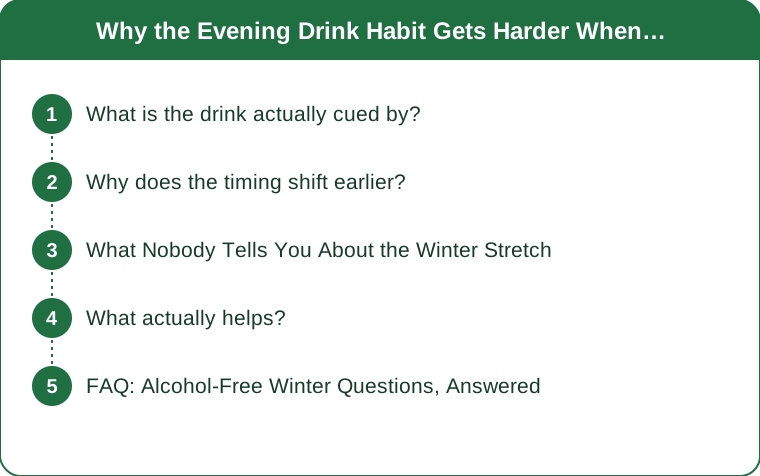
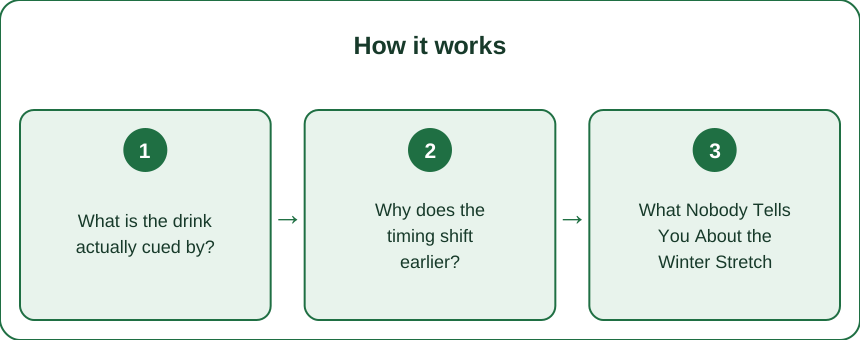
What is the drink actually cued by?
Rarely by a craving arriving out of nowhere. For most people the evening drink is the marker at the end of the working day - the thing that says the day changed category.
That function is worth taking seriously, because it explains why the habit is so resistant. It is not doing nothing. It is performing a real job: converting a day of obligation into an evening of your own.
In summer, that conversion has plenty of external help. It is light at seven, you go outside, you eat later, the day physically feels different after work than during it. The drink is one marker among several.
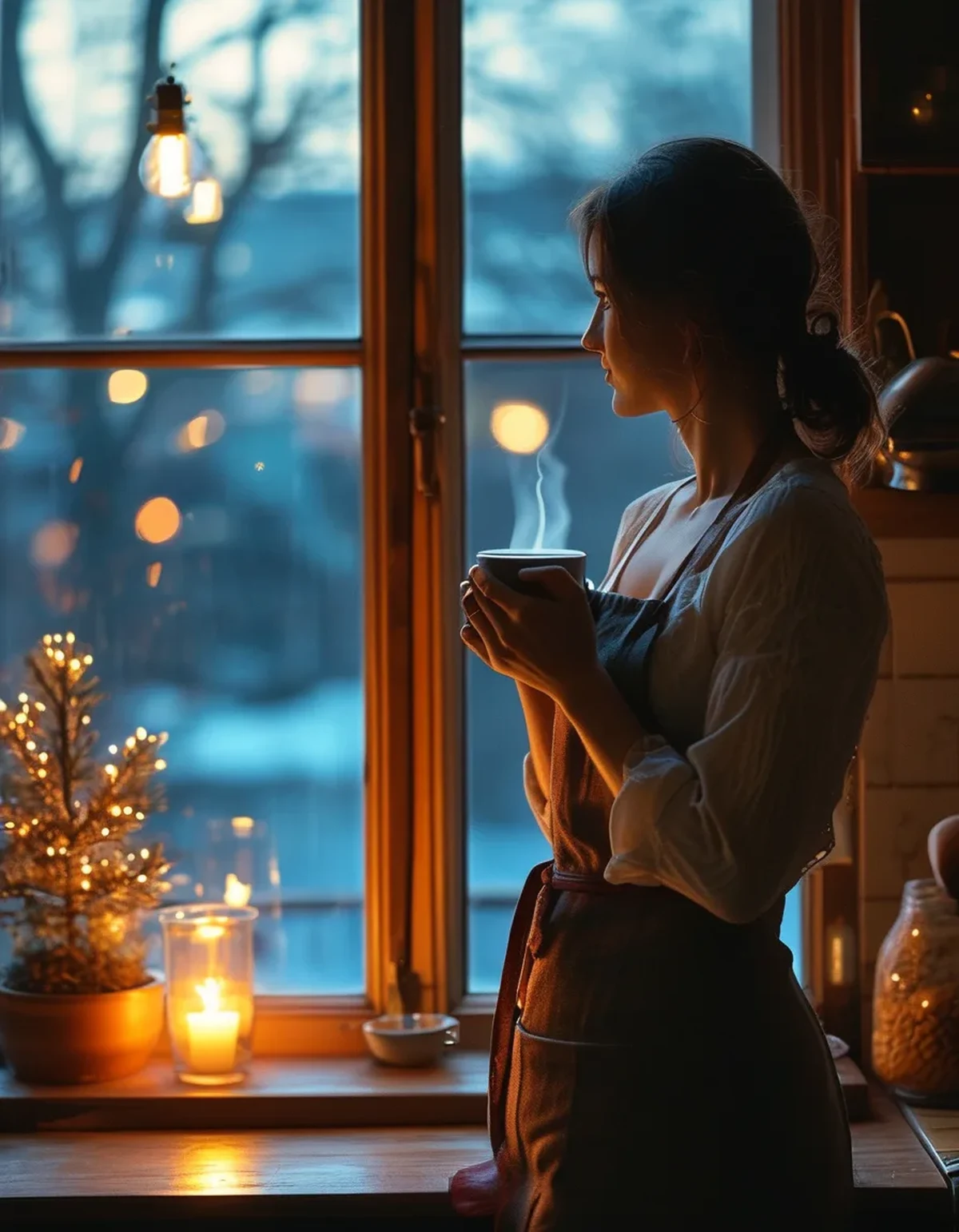
In late autumn, all the other markers disappear. It is dark before you finish, you do not go outside, and the room you finish work in looks identical to the room you spend the evening in.
When the drink is the only remaining marker of the transition, it carries far more weight. That is why it gets harder in November despite months of practice, and it is why willpower is the wrong tool - you are not resisting a stronger urge, you are being asked to do without the only signal you have left.
Why does the timing shift earlier?
Partly light, partly the shape of the day.
The light effect is direct. Darkness triggers melatonin release and a general shift toward wind-down mode, and if your association is drink-equals-evening, then the body arriving at evening three hours early brings the association with it. It genuinely feels later than it is.
The shape effect is about the length of the gap. In summer, the stretch between finishing work and going to bed contains a walk, some daylight, a later dinner, maybe something outside. In November it contains none of those, and it is the same number of hours - which now have to be filled indoors, in the dark, with nothing structurally different about them.
A longer undifferentiated evening is more difficult than a shorter varied one, and this is where most of the extra difficulty actually lives. Five thirty to eleven with nothing marking it is a lot of hours.
There is also a mood component. Reduced light exposure lowers mood and energy in a substantial proportion of people, and low mood is one of the most reliable predictors of a lapse. That is not a character issue - it is a light exposure issue that responds to light exposure. Persistent low mood through the darker months is worth raising with a doctor, since seasonal affective disorder is both common and treatable. This is general information, not medical advice.
What Nobody Tells You About the Winter Stretch
The first dark month is harder than the first month sober was. People plan for the early weeks and treat month four as safe territory. The seasonal shift lands on people who thought the difficult part was behind them, which makes it feel like a setback rather than a predictable event.
Weekends get harder before weekdays do. A weekday still has structure imposed on it. An unstructured Saturday that is dark by four is the highest-risk block in the week for a lot of people, and it is worth planning specifically rather than hoping.
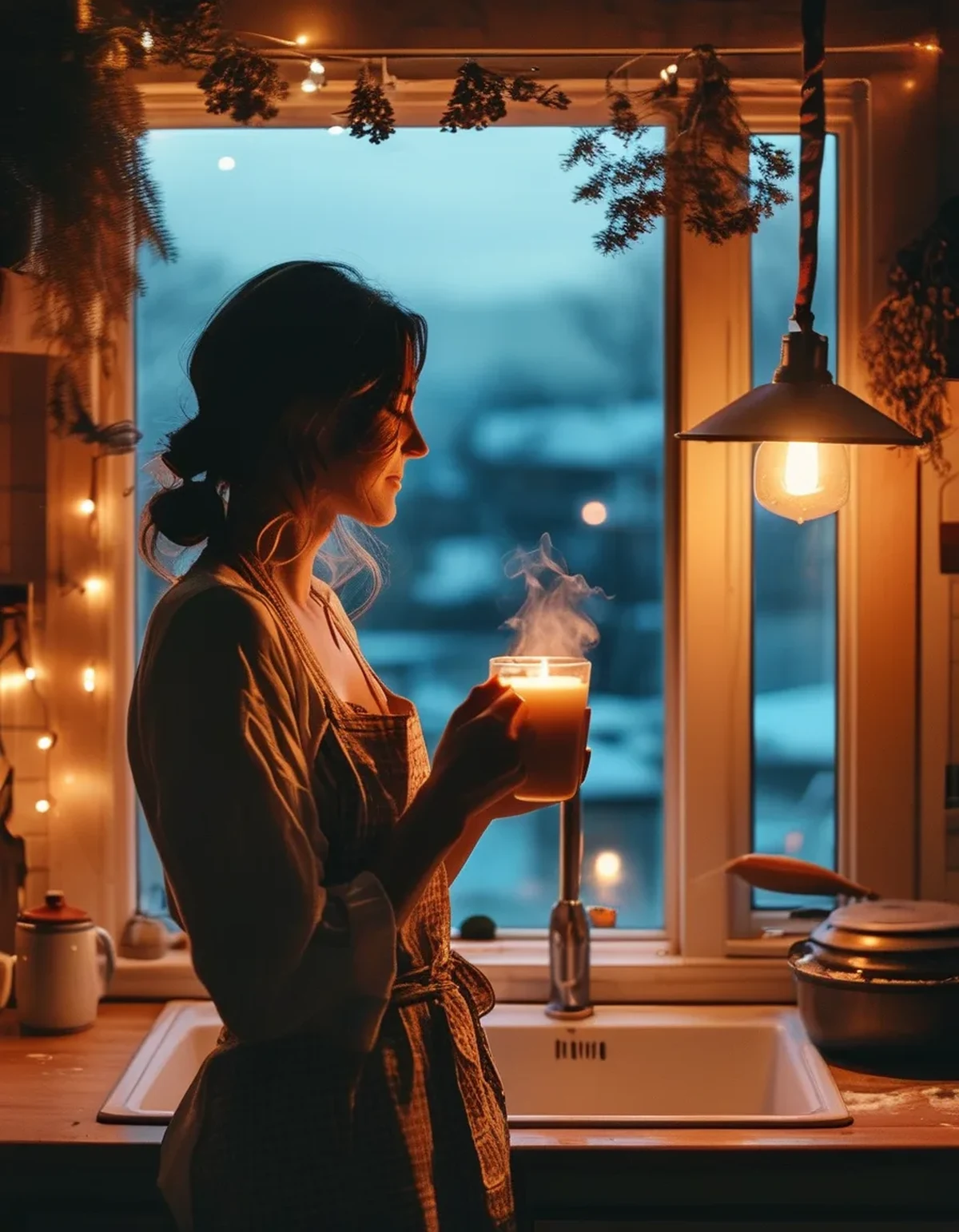
The replacement drink stops working around now. Sparkling water and lime is a summer solution. It is cold, it is light, and it is exactly what nobody wants in a cold room in November. The alcohol-free options that survive the winter are warm or substantial: proper hot chocolate, a good tea ritual, warm spiced apple, a decent alcohol-free beer poured into actual glassware.
The social calendar inverts. Summer socialising is outdoor, daytime, and incidental. Winter socialising is indoor, evening, and drinking-centred, and the density of it rises sharply from late November. More events, all in the harder format.
And the one that catches most people out - the extra hour from the clock change is not neutral. That hour lands directly in the part of the evening that was already the difficult part, and if it is not given something to do, it is given to the thing you are trying not to do.
What actually helps?
Rebuild the marker, then shorten the stretch.
Build a physical transition and make it non-negotiable. Change clothes. Go outside for five minutes even in the dark, even in the rain. Shut the laptop and physically move it. It must be something your body does rather than something you decide, because the thing you are replacing was also physical.
Move the good thing to the difficult hour. Whatever you actually enjoy in the evening, put it at five thirty rather than at eight. The vulnerable window is the empty one immediately after work, and filling that specific hour does more than filling the whole evening.
Get morning light. Ten to fifteen minutes of outdoor daylight before nine in the morning improves mood and evening sleepiness more reliably than anything you do in the evening. It is the least appealing intervention on this list and among the most effective.
Change the lighting at home. Overhead lights at six in the evening keep the room in work mode. Two lamps at eye level change the category of the room, and it is a genuinely large effect for the price of a lamp.
Upgrade the replacement to something warm. The cold fizzy substitute stops working in the cold months. A proper hot drink made properly, in a good mug, is a better match for what the season is actually asking for.
Plan the weekend afternoons. Not the evenings - the afternoons. A Saturday with something in it at two o’clock changes the whole evening that follows, and an empty Saturday afternoon is where the difficulty starts.
FAQ: Alcohol-Free Winter Questions, Answered
Does this get easier next year?
Usually yes. The first alcohol-free winter is the hardest because every seasonal cue is being met for the first time without the old response. By the second, most of those cues have a new association attached.
Is it worth using a light therapy lamp?
For people whose mood clearly tracks the seasons, there is reasonable evidence for morning light therapy. Used in the morning rather than the evening, and worth discussing with a doctor if your low mood is significant.
What do I do about the sudden increase in work and social events?
Decide before you go rather than in the room - what you will drink, when you will leave, and who you will tell. The decisions are much easier made in advance, and having an actual leaving time is the one that helps most.
TL;DR:
- The evening drink is usually a transition marker, and darkness removes every other marker you had.
- The cue arrives around three hours earlier and the unstructured evening gets several hours longer.
- Build a physical transition, move something you enjoy into the five-thirty hour, and change the lighting.
- Swap cold fizzy replacements for warm ones, get morning daylight, and plan weekend afternoons rather than evenings.
The difficulty in November is structural, not personal. Put a marker back where the light used to be and the evening returns to its ordinary shape.
Keep Reading
This article is for general informational purposes only and is not medical advice. Always consult a qualified health professional for guidance specific to you.