Why a Well-Made Mocktail Still Leaves You Craving 'Something More'
Quick Answer: A mocktail can nail the flavor of a cocktail but still leave you unsatisfied because it’s missing the mild physiological effect (relaxation, slight warmth) alcohol produces — that’s a chemical experience, not a taste one, and no amount of garnish or bitters recreates it directly.
The bartender nailed the flavor profile. The glass looked exactly right. And yet twenty minutes in, something still feels missing in a way you can’t quite explain by taste alone.
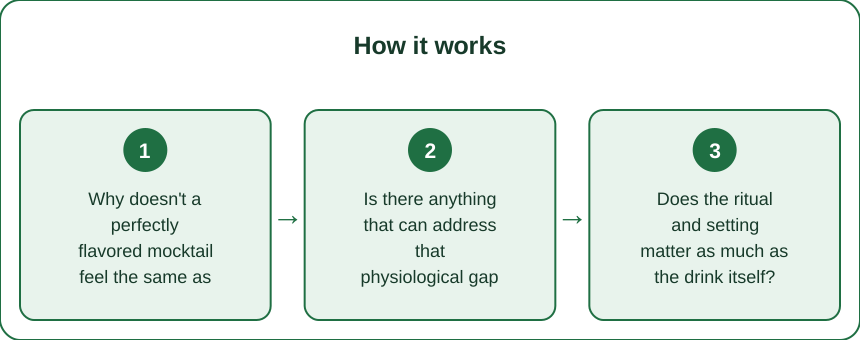
Why doesn’t a perfectly flavored mocktail feel the same as a cocktail?
Alcohol produces a mild physiological effect — a slight relaxation response and warmth — that’s completely separate from how a drink tastes. A mocktail can match or exceed a cocktail’s flavor complexity through bitters, shrubs, and careful balance, but flavor alone was never the part of a cocktail experience that alcohol itself was providing. The craving you’re feeling is often for that physiological shift, not for a better-tasting drink.
Is there anything that can address that physiological gap directly?
Some non-alcoholic options now use adaptogens or small amounts of ingredients like ashwagandha or GABA-supporting botanicals specifically aimed at a mild calming effect, which is a more direct attempt at the physiological piece rather than the flavor piece. Results vary a lot person to person, and these aren’t regulated the same way alcohol is, so effects tend to be subtle at best.
Does the ritual and setting matter as much as the drink itself?
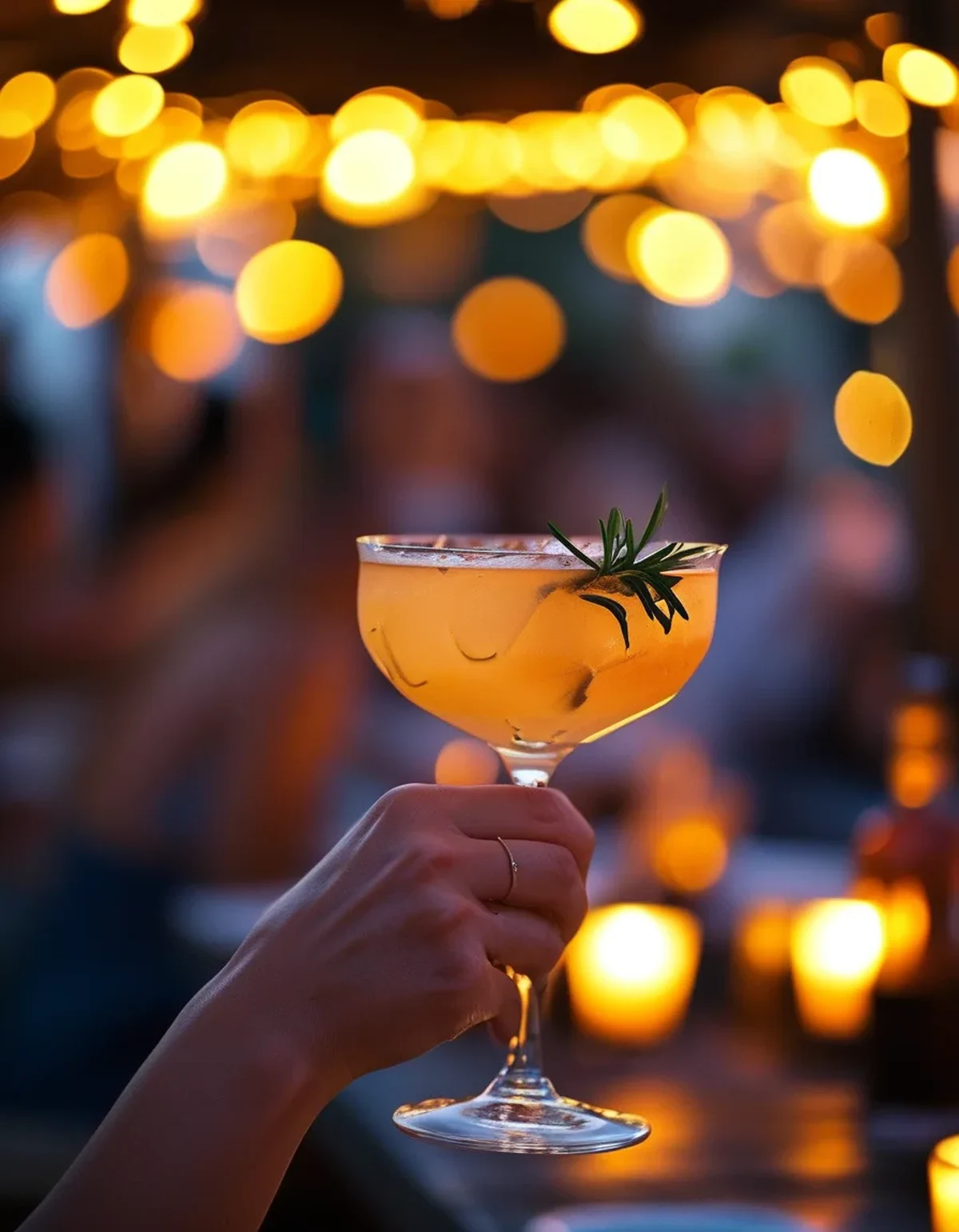
Often more than people expect. Part of what a cocktail ‘provides’ socially is the ritual — the glass, the moment of ordering, the pause it creates in a conversation. Recreating that ritual carefully (a proper glass, a moment of intention before sipping) can address a meaningful part of the craving that isn’t chemical at all, just habitual and social.
What Nobody Tells You About the Timeline of Adjusting
Here’s what most sober-curious resources don’t emphasize enough: the craving for that physiological shift typically fades measurably over several weeks to a few months of consistent alcohol-free choices, not immediately. Expecting a single well-made mocktail to instantly replace years of habitual physiological association sets an unrealistic bar — the adjustment is a gradual recalibration, not a one-drink swap.
Myth vs Fact: Mocktails and Cravings
Myth: A good enough mocktail should feel identical to a cocktail. Fact: Flavor and physiological effect are two separate things — a mocktail can nail one and still miss the other by design.
Myth: If mocktails don’t satisfy you, alcohol-free living isn’t for you. Fact: The craving gap is common early on and tends to fade with consistency over weeks, not an immediate switch.
Myth: Adaptogen mocktails are a guaranteed physiological replacement. Fact: Effects are subtle and vary widely — they’re a partial attempt at the gap, not a proven equivalent.
FAQ: Alcohol-Free Drink Questions, Answered
How long does the craving for that physiological effect typically last?
Many people report a noticeable reduction within 4-8 weeks of consistent alcohol-free choices, though it varies by individual habit history.
Are adaptogen or GABA mocktails worth trying?
They’re reasonable to try since effects are generally mild and low-risk, but go in with modest expectations rather than expecting a strong physiological match.
Does the glass and ritual actually make a measurable difference?
Many people report it does — using a proper glass and taking a deliberate pause before drinking addresses part of the experience that’s habitual rather than chemical.
TL;DR:
- Mocktails can match cocktail flavor but miss the mild physiological effect alcohol provides — that’s a separate thing entirely
- Adaptogen or GABA-forward options attempt the physiological gap directly, with modest, variable results
- Ritual and presentation (proper glass, a deliberate pause) address the social/habitual part of the craving
- The craving gap commonly fades over weeks of consistency, not instantly
If a great-tasting mocktail still feels incomplete, give it a few more weeks before concluding it’s the drink’s fault — the gap you’re noticing usually closes with time, not a better recipe.
Keep Reading
This article is for general informational purposes only and is not medical advice. Always consult a qualified health professional for guidance specific to you.