Why Going Alcohol-Free Gets Harder When Summer Social Season Ends
Quick Answer: Summer supports alcohol-free choices structurally — long daylight, outdoor settings, physically active plans, and a culture of cold non-alcoholic refreshments that don’t read as substitutes. Autumn removes all four at once and replaces them with indoor evenings, earlier darkness, and warm-drink social rituals where alcohol is the default. The strategies that carried you through August need rebuilding for the setting, not more willpower.
You handled three months alcohol-free without much strain. Then the first cool week arrives and it’s suddenly harder. The setting changed underneath you.
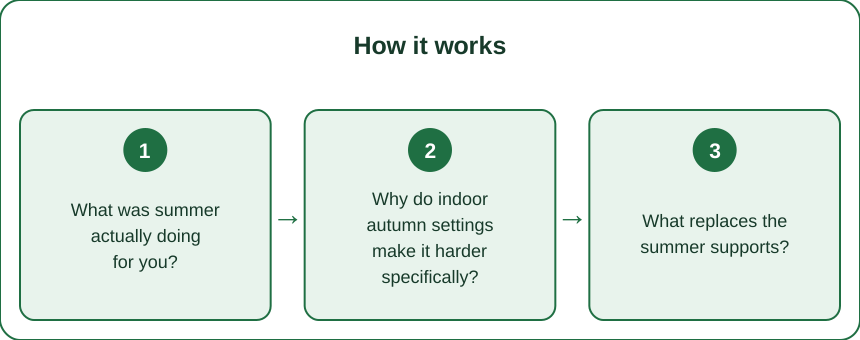
What was summer actually doing for you?
Four structural things, none of which had much to do with resolve.
Daylight extended the evening. With light until 8:30, evenings didn’t have a clear point where they turned into drinking hours. The transition from day to night — which is a strong learned cue for many people — was pushed late and blurred.
Plans were outdoors and often active. Hikes, beaches, walks, patios. Physical activity and daylight both reduce the pull toward alcohol, and outdoor settings have lower drinking density than indoor ones. The plan itself was doing work you didn’t have to do consciously.
Cold non-alcoholic drinks read as first-class. Sparkling water with lime, iced tea, a cold NA beer at a barbecue — none of these signal “I’m not drinking.” They read as what a person drinks in the heat. There’s no social explanation required.
Gatherings were shorter and more diffuse. Outdoor summer events have people arriving and leaving, moving between groups, standing rather than sitting. Less sustained time in one seated drinking context.
What autumn removes
All four, roughly simultaneously, over about three weeks. Which is why the difficulty seems to arrive suddenly rather than gradually — you lose several supports at once and the change is genuinely a step rather than a slope.
Why do indoor autumn settings make it harder specifically?
Because they concentrate every variable that summer diffused.
Duration goes up. An indoor dinner or a bar evening runs three or four hours seated in one place. That’s a much longer stretch of continuous exposure than a summer afternoon where people came and went.
Darkness arrives during the event rather than after it. By October, an event that starts at 6 is dark from the beginning. The whole evening carries the cue that summer pushed to the end.
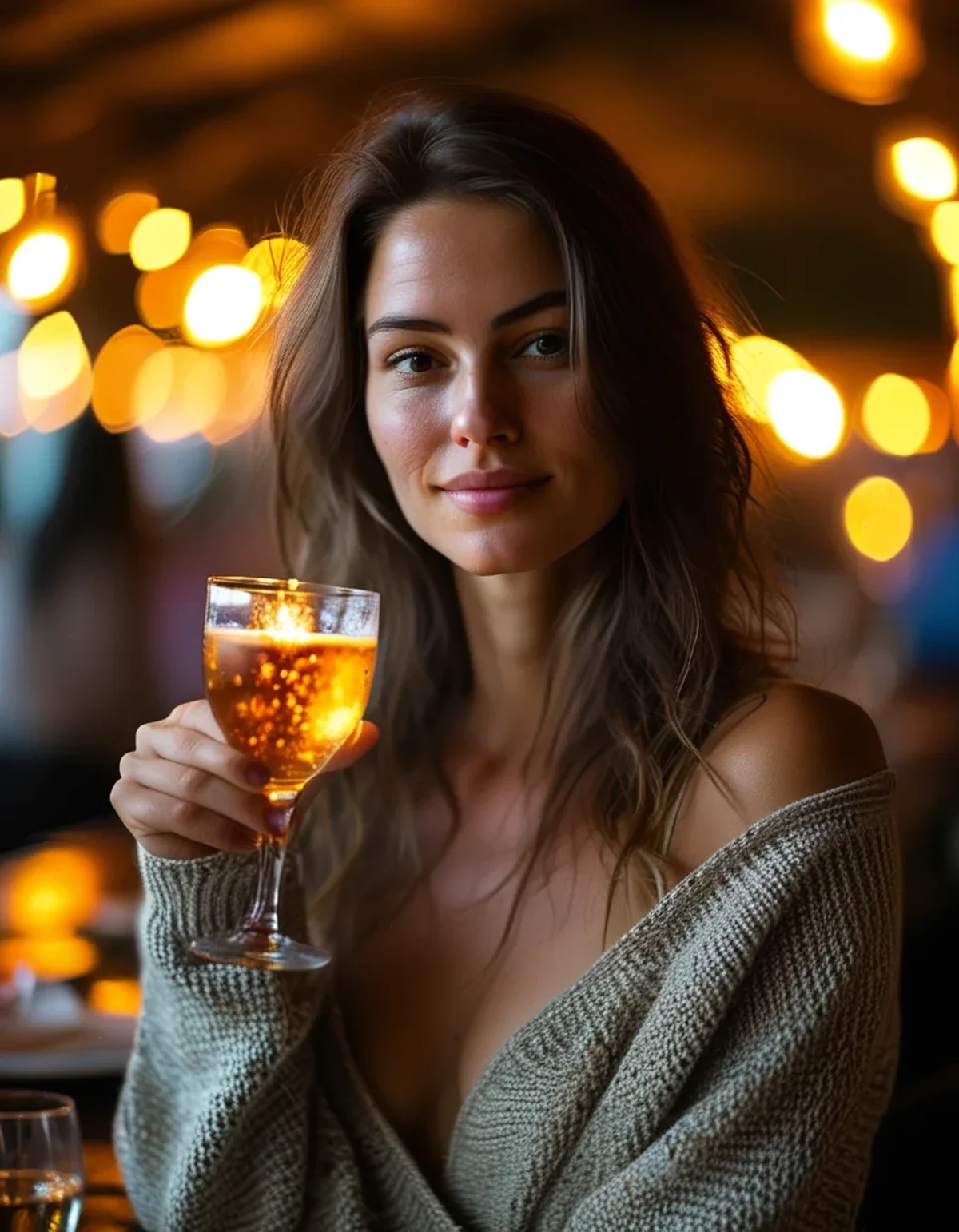
The drink menu shifts to warm and spiced. Fall social drinking centers on things that don’t have obvious alcohol-free counterparts — mulled wine, whiskey drinks, cider with a spirit in it. Sparkling water reads as a summer drink, and ordering one in October feels visibly like abstaining in a way it didn’t in July.
The season carries a comfort framing. Autumn drinking is coded as cozy rather than celebratory, which makes it harder to decline without seeming to reject the whole mood. Turning down a celebratory drink is easy; turning down a comfort ritual feels like turning down the company.
Holiday anticipation starts early. By late October, the run of obligatory social events is visible on the calendar, and the anticipation itself is a stressor for anyone recently alcohol-free.
What replaces the summer supports?
Deliberate versions of what the season was providing incidentally.
Find warm alcohol-free drinks you actually like — before you need them. This is the highest-return preparation available, and it takes one afternoon. Hot spiced cider, a proper chai, an NA hot toddy with lemon and honey and ginger, or good decaf coffee drinks. The goal is having something you’d genuinely choose, not a fallback. Test them at home in September so you have an order ready in November.
Move plans earlier. A 5 p.m. coffee or a lunch has a completely different drinking density than an 8 p.m. dinner. This is the single most effective structural change and it requires no explanation to anyone.
Keep at least one active or outdoor thing per week. Not for fitness — for the same reason it worked in summer. A weekend walk, a Saturday morning class, anything that anchors part of the week outside the indoor evening pattern.
Have the script ready before the event. The most reliable predictor of a difficult evening is arriving without having decided what you’ll say. “I’m not drinking tonight” needs no elaboration and closes the topic. Deciding in advance means you’re not making the decision in the moment, in the room, with a drink in someone’s hand.
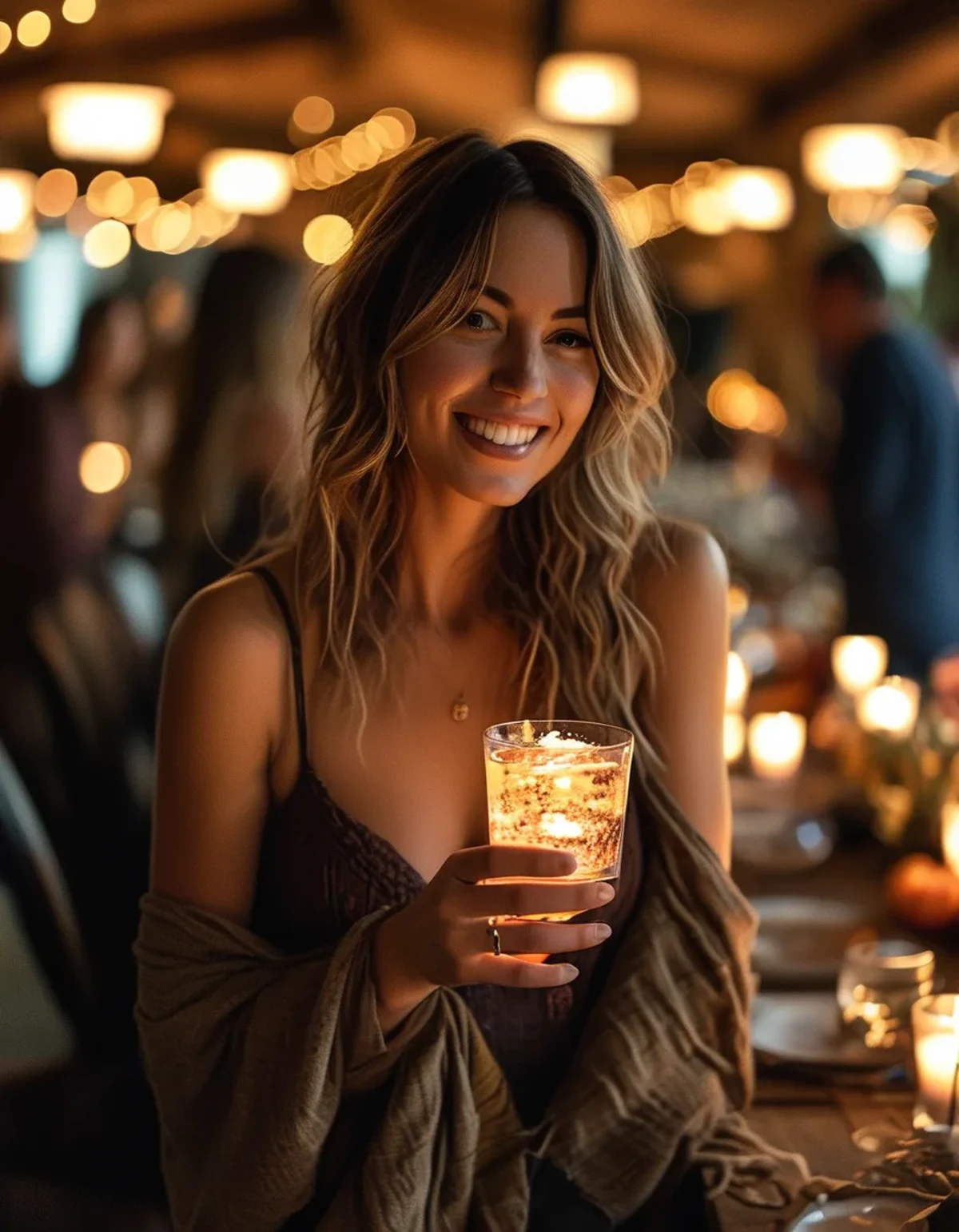
Arrive with a drink already in hand. An empty hand at an indoor gathering gets filled by someone else. This is a small mechanical trick and it prevents a disproportionate share of unwanted moments.
Myth vs Fact: Alcohol-Free in Autumn
Myth: If it was easy in summer, it should stay easy. Fact: Summer provided daylight, outdoor settings, active plans, and a refreshment framing. Autumn removes all four. Difficulty increasing is a change in conditions, not a change in you.
Myth: Non-alcoholic versions of warm drinks are a poor substitute. Fact: Warm alcohol-free drinks are the category that’s improved most in the last few years, and a properly made spiced cider or hot toddy without the whiskey holds up far better than most cold NA options ever did.
Myth: Declining is more awkward in autumn. Fact: It feels that way because the setting is more intimate, but the actual social response is nearly identical. What changes is your anticipation of it, which is why deciding on a script in advance matters more this season.
Myth: You should avoid social events until it gets easier. Fact: Avoidance tends to make the next event harder rather than easier, and it costs you the social connection that supports the change in the first place. Attending with a plan beats not attending.
Myth: The first alcohol-free autumn is the hardest one. Fact: Generally true, and worth knowing — the seasonal cues weaken substantially the second year through, once you’ve built a set of autumn rituals that don’t involve alcohol.
FAQ: Seasonal Alcohol-Free Questions, Answered
Is the fall craving pattern actually different or is it in my head?
It’s real and situational — shorter days, indoor settings, and longer seated events all raise exposure. It’s about circumstances more than about mood.
What’s the best warm alcohol-free drink to have ready?
A hot toddy base of lemon, honey, ginger, and hot water is the most convincing, and most bars can make it without the whiskey if you ask.
How do I handle the holiday event run?
Decide in advance which two or three matter, plan those properly, and keep the rest short. Trying to run the full calendar at full length is what wears people down.
Do NA beers help or trigger cravings?
It varies substantially by person. If the taste and ritual satisfy you, they help; if they sharpen the wanting, skip them. Both responses are common.
Should I tell people I’m not drinking?
Only if you want to. “I’m good with this” while holding something works fine and invites no follow-up.
TL;DR:
- Summer supported alcohol-free choices through daylight, outdoor plans, activity, and cold-drink framing
- Autumn removes all four in about three weeks, which is why the difficulty feels sudden
- Indoor events run longer, start dark, and center on warm drinks with no obvious NA counterpart
- Build a warm alcohol-free drink you genuinely like in September, before you need it in November
- Move plans earlier, keep one outdoor thing weekly, and decide your script before you walk in
It didn’t get harder because you lost momentum. Summer was carrying part of the load, and it handed the load back.
Keep Reading
This article is for general informational purposes only and is not medical advice. Always consult a qualified health professional for guidance specific to you.