Why You Crave a Drink at the Exact Same Time Every Night
Quick Answer: A same-time nightly craving is a learned cue-response loop, not a willpower failure — your brain has paired a specific time or transition (like walking in the door) with a drink so many times it now fires the craving automatically. Break the cue, not just the drink, and the craving fades within 2-3 weeks.
It’s never random. 6:03pm, every night, the urge shows up like a scheduled appointment. That precision is actually good news — it means you’re dealing with a pattern you can interrupt, not a mystery.

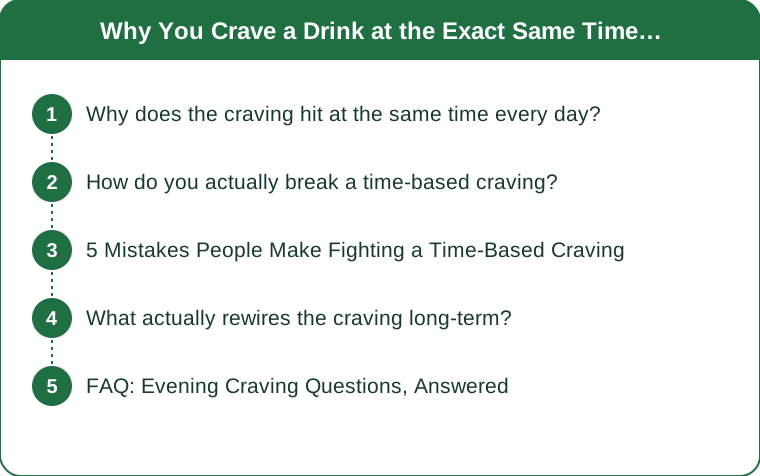
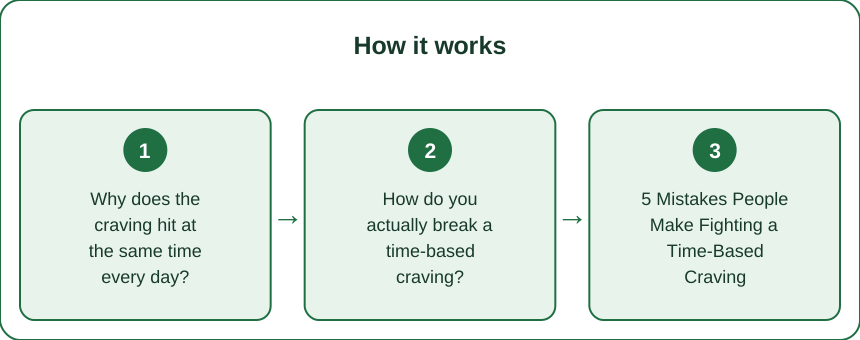
Why does the craving hit at the same time every day?
Your brain builds associations between context and reward, not just substance and reward. If you’ve poured a drink at 6pm after work for months, the transition itself — keys down, shoes off, kitchen light on — becomes the trigger, independent of actual stress or thirst.
This is the same mechanism as smokers craving a cigarette with morning coffee. The cue, repeated enough times, becomes as strong as the craving for the substance itself.
How do you actually break a time-based craving?
Change the transition ritual, not just your willpower in the moment. If ‘walking in the door’ is the trigger, insert a new action at that exact point — a 5-minute walk before you go inside, a different drink already poured and waiting, music on before you touch the kitchen.
Expect the craving to still show up for the first 10-14 days even with a new ritual. That’s normal — you’re not failing, you’re mid-rewire. The intensity drops noticeably by week 3.

5 Mistakes People Make Fighting a Time-Based Craving
1. Relying on willpower alone. Pure resistance works for a few days, then decision fatigue wins. You need a replacement action, not just a ‘no.’
2. Fighting it at the peak. The craving is hardest right at the trigger moment. Change happens easier before it — alter the routine an hour earlier.
3. Removing alcohol but keeping the ritual. Sitting in the same chair at the same time with sparkling water still primes the craving. Change the whole scene, not just the glass.
4. Expecting it to vanish immediately. Cue-response loops built over months take weeks to unwind, not days.
5. Not tracking it. Without a log, you can’t see the craving actually weakening — and that invisible progress is what makes people quit right before it gets easier.
What actually rewires the craving long-term?
Repetition of a new pairing. Each time you hit that trigger time and respond with something else — tea, a walk, a call to a friend — you weaken the old association and build a new one. Studies on habit change put this at roughly 3-4 weeks of consistent substitution before the new response starts feeling automatic rather than effortful.
If cravings are intense, tied to withdrawal symptoms, or you’ve tried cutting back and couldn’t, that’s a sign to loop in a doctor — some withdrawal patterns need medical support, not just habit tricks.
FAQ: Evening Craving Questions, Answered
Is it normal to crave a drink at the exact same time every day?
Yes — this is one of the most common patterns reported by people cutting back, precisely because evening transitions (end of work, start of home time) get paired with a drink so consistently.
How long until the craving stops showing up at that time?
Most people notice a real drop by week 3 of consistently substituting a new ritual at that exact trigger point, with cravings continuing to fade over 2-3 months.
Should I avoid the trigger time entirely, like staying out later?
Avoidance works short-term but doesn’t rewire anything — the craving just waits for you at home. Facing the moment with a planned substitute builds the new association faster.
TL;DR:
- A same-time craving is a learned cue-response loop tied to a daily transition, not a discipline problem
- Change the ritual at the trigger point, not just your resistance in the moment
- Expect 2-3 weeks before the craving noticeably weakens
- Track it — invisible progress is why people quit right before it gets easier
This is general information, not medical advice — if cravings involve withdrawal symptoms, talk to a doctor before cutting back on your own.
Keep Reading
This article is for general informational purposes only and is not medical advice. Always consult a qualified health professional for guidance specific to you.