Going Alcohol-Free Doesn't Mean You're Relaxed Yet — Here's the Timeline Nobody Mentions
Quick Answer: Most people’s nervous systems take 3-6 weeks of consistent alcohol-free evenings before the automatic “wind down” signal returns without a drink. The first 2 weeks often feel more restless before they feel calmer — that’s expected, not a sign it’s not working.
You cut out the evening wine expecting instant calm, and instead week one feels jittery and week two feels worse. Nobody mentions that your brain built an association between alcohol and relaxation over years, and unwinding that takes longer than a weekend.

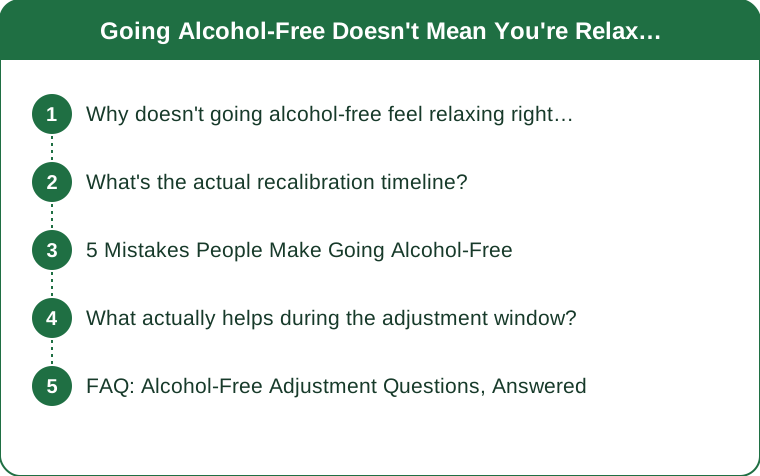
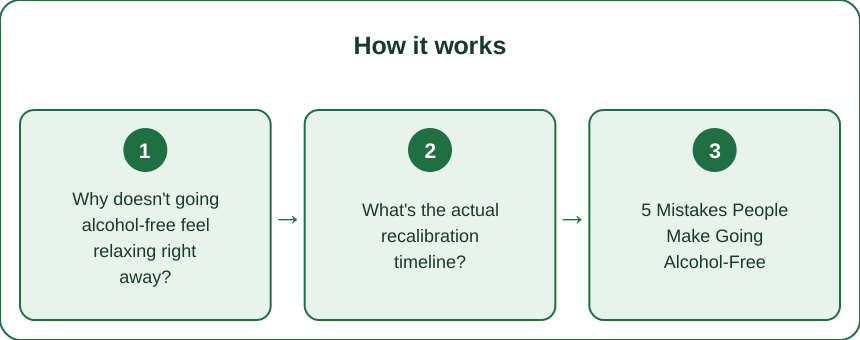
Why doesn’t going alcohol-free feel relaxing right away?
Because alcohol didn’t just relax you — it became the cue your nervous system used to signal “the day is over.” Remove the cue and the system briefly has no signal at all, which reads as restlessness, not calm.
This is a learned association, not a chemical dependency issue for moderate drinkers, but it still takes real time to unlearn.
What’s the actual recalibration timeline?
Roughly: days 1-10 often feel more restless or wired than before, as old cues fire with nothing to answer them. Weeks 2-4 are typically the hardest for sleep specifically. By weeks 4-6, most people report new evening cues (tea, a show, a walk) starting to carry the same “day is done” signal alcohol used to.
This isn’t universal, but it’s the pattern reported consistently enough to expect it rather than panic at week 2.

5 Mistakes People Make Going Alcohol-Free
1. Expecting immediate calm. The dip before the improvement is normal, not a red flag.
2. No replacement ritual. Removing the cue without installing a new one leaves evenings feeling empty, which reads as anxiety.
3. Comparing night one to month two. Different data points — track weekly, not nightly.
4. Quitting caffeine at the same time. Two changes at once make it impossible to tell what’s causing what.
5. Isolating instead of socializing differently. Skipping events entirely (rather than attending sober) removes a coping skill you actually need to build.
What actually helps during the adjustment window?
A consistent replacement ritual at the same time you used to pour a drink — a specific tea, a short walk, a call with the same friend — gives your nervous system a new cue to latch onto instead of nothing.
Magnesium-rich foods and consistent sleep/wake times also support the transition, though they’re supporting factors, not fixes on their own.
FAQ: Alcohol-Free Adjustment Questions, Answered
Is it normal to feel more anxious the first 2 weeks alcohol-free?
Yes, commonly reported — it’s usually the removed cue effect, not a sign of a deeper problem, and it tends to ease by week 3-4.
How long until sober evenings feel normal, not like something’s missing?
Most people report 4-6 weeks before a new ritual feels as automatic as the old one did.
When should restlessness be taken more seriously?
If anxiety or sleep problems are severe, worsening, or you were a heavy/dependent drinker, that’s a see-a-professional situation rather than a wait-it-out one. This is general information, not medical advice.
TL;DR:
- The first 10-14 days often feel more restless, not calmer — that’s expected
- Full recalibration typically takes 3-6 weeks of consistency
- A replacement evening ritual matters more than willpower alone
- Change one thing at a time (don’t quit caffeine and alcohol together) to read your own signals clearly
Give it the full 4-6 weeks before judging whether alcohol-free evenings work for you.
Keep Reading
This article is for general informational purposes only and is not medical advice. Always consult a qualified health professional for guidance specific to you.