Alcohol-Free Beer and Wine Have Gotten Genuinely Good — Here's What to Actually Buy
Quick Answer: Alcohol-free beer and wine improved dramatically in the last several years due to new dealcoholization methods (vacuum distillation, reverse osmosis) that preserve flavor compounds better than older heat-based methods. Start with alcohol-free IPAs and dealcoholized sparkling wine — both hold up closest to their alcoholic counterparts.
If your last non-alcoholic beer experience was years ago, it was probably watery and vaguely beer-flavored. The category has moved fast, and a lot of people are still shopping from an outdated impression.
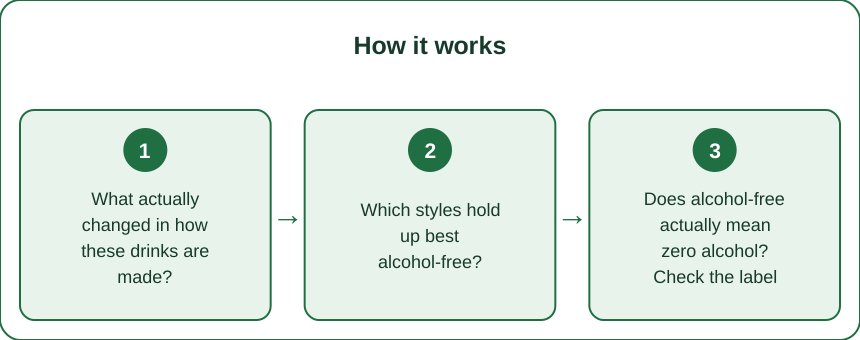
What actually changed in how these drinks are made?
Older non-alcoholic beers were often brewed to stop fermentation early, which left them thin and under-flavored — alcohol carries a lot of a beer’s body and mouthfeel, so removing the fermentation step removed that too.
Newer methods brew a full-strength beer first, then remove the alcohol via vacuum distillation or reverse osmosis — techniques that pull out ethanol at lower temperatures, preserving far more of the hop and malt flavor compounds that heat-based removal used to destroy. That’s the real reason today’s options taste closer to the real thing.
Which styles hold up best alcohol-free?
Hoppy styles (IPAs, pale ales) tend to translate best — hop bitterness and aroma survive the dealcoholization process well and can mask any remaining thinness in body.
Sparkling wine and Champagne-style dealcoholized wines also hold up notably well, since carbonation and acidity carry a lot of the drinking experience even without alcohol’s mouthfeel contribution.
Alcohol-free red wine remains the hardest style to get right — red wine’s body and tannin structure lean heavily on alcohol, and that gap is harder to fully disguise. Expect more variation in quality here than with beer or sparkling wine.
Does alcohol-free actually mean zero alcohol? Check the label
Not always — ‘alcohol-free’ and ‘0.0%’ aren’t legally identical everywhere. Many products labeled ‘non-alcoholic’ in the US can legally contain up to 0.5% ABV, which is a meaningful difference for anyone who needs to be at true zero for medical, recovery, or personal reasons.
Check for an explicit ‘0.0%’ on the label if that distinction matters to you — ‘non-alcoholic’ alone isn’t a guarantee, it’s a broader legal category that includes some trace alcohol content.
Why does declining a drink feel harder in a group than alone?
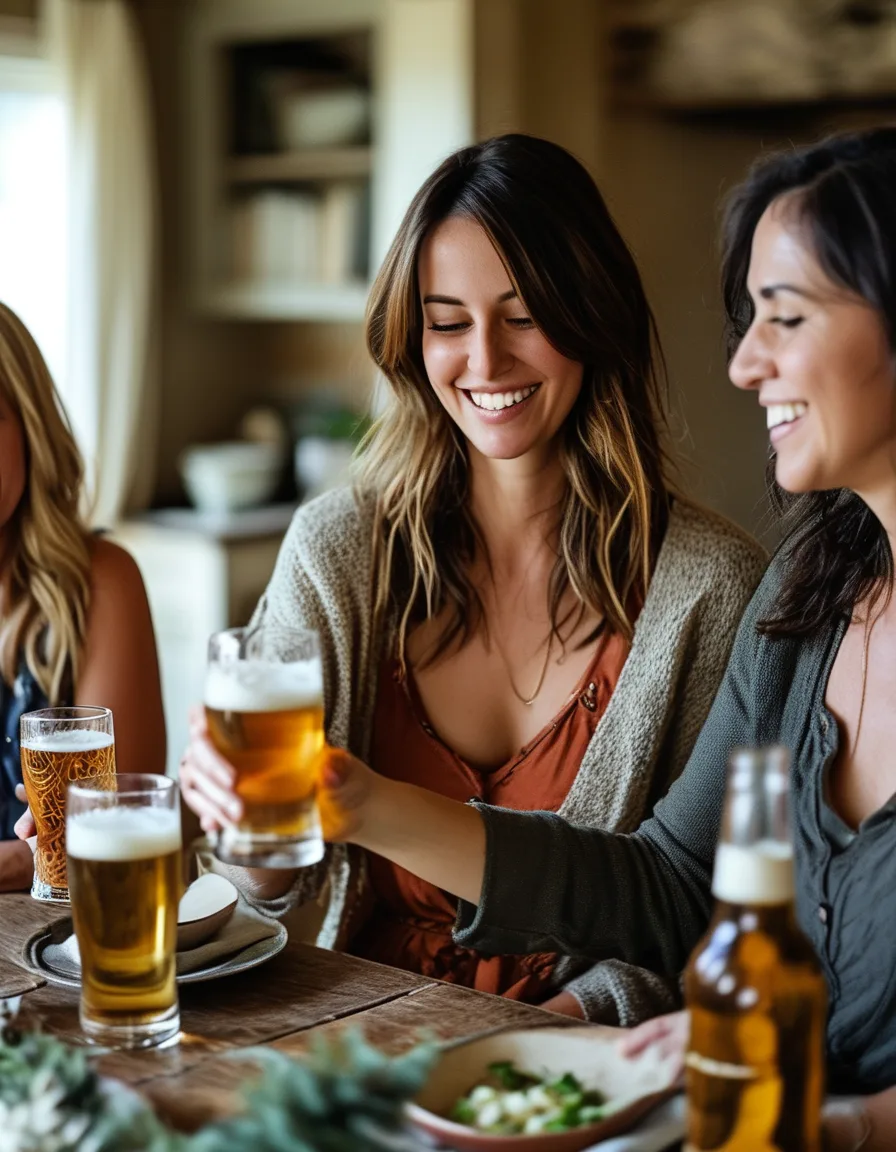
This is more social than chemical: in a group setting, a drink in hand functions as a visible signal that you’re participating in the social ritual, separate from the alcohol itself. Holding a good alcohol-free beer or wine solves this directly — it restores the visual and ritual participation without requiring the conversation about why you’re not drinking.
This is a big part of why quality matters here beyond taste alone: a convincing alcohol-free option removes a layer of social friction that a plain soda or water often doesn’t.
FAQ: Alcohol-Free Beer and Wine Questions, Answered
Do alcohol-free beers still have calories?
Yes, generally fewer than their alcoholic counterparts but not zero — most land in the 60-90 calorie range per serving, still coming from remaining malt sugars.
Can you get a buzz from 0.5% ABV drinks if you drink several?
For most people, no meaningful effect — 0.5% is well below the threshold that produces intoxication even across multiple servings, but if you need true zero for medical reasons, stick to explicitly labeled 0.0% products.
Are alcohol-free spirits as far along as beer and wine?
Less consistently — the category is newer and more variable in quality, though botanical-forward gin alternatives have generally had the most success replicating a satisfying drinking experience.
TL;DR:
- Modern dealcoholization (vacuum distillation, reverse osmosis) preserves flavor far better than older methods
- Hoppy beers and sparkling wine translate best; alcohol-free red wine still lags
- ‘Alcohol-free’ can legally mean up to 0.5% ABV — check for 0.0% if that matters to you
- A convincing alcohol-free drink removes social friction, not just alcohol
If your last try was years ago, it’s worth revisiting — the category genuinely isn’t what it used to be.
Keep Reading
This article is for general informational purposes only and is not medical advice. Always consult a qualified health professional for guidance specific to you.